Real-Time Projection Mapping on a 360° Rotating Stage for Chongqing · 1949
Published
- Projection Mapping
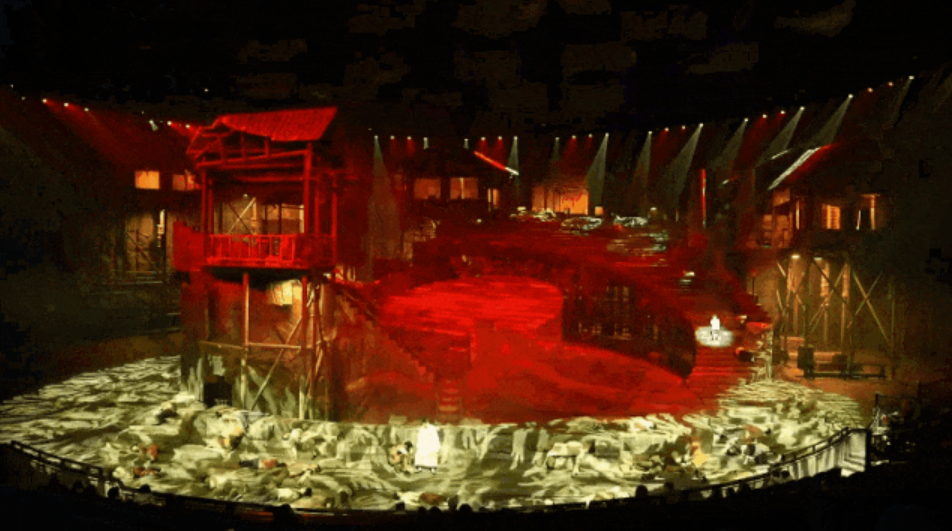
Chongqing · 1949 is performed inside one of the world's largest indoor immersive theaters, combining large-scale moving stage structures with projection-driven storytelling. As part of a major technical upgrade, the production introduced one of its most ambitious visual elements: a five-ring, 360-degree rotating stage.
Unlike conventional static projection surfaces, the stage consists of five concentric rings that continuously rotate during the performance. The constantly changing positions, curved surfaces, and complex geometry created significant challenges for traditional projection mapping workflows.
To overcome these limitations, the production team turned to hecoos for a new approach to real-time projection control and mapping.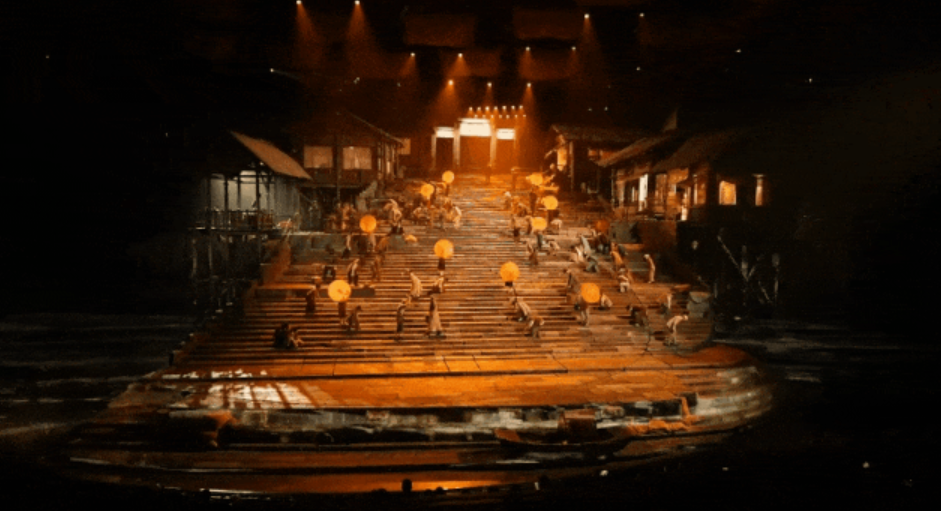
Specifications
System Configuration: 7 hecoos serversProjection System: 24 projectors
Core Technology: Cylindrical Projection workflow
Integration: 3D stage model import and real-time synchronization
A New Projection Workflow for Moving Curved Surfaces
Traditional projection mapping methods are designed primarily for fixed surfaces. However, the rotating rings of Chongqing · 1949 required projected content to remain accurately aligned while the physical structure was constantly moving.To address this challenge, the hecoos engineering team developed a dedicated Cylindrical Projection feature for the project. By adapting projection calculations for curved and rotating structures, the workflow allowed visual content to wrap naturally around the cylindrical surfaces while maintaining correct image geometry throughout the performance.
Connecting Digital Content with Physical Stage Movement
The production team imported the stage's 3D model directly into hecoos, allowing the virtual projection environment to correspond with the physical structure. This enabled digital content and stage movement to remain synchronized in real time, ensuring projected imagery stayed accurately positioned as the five rings rotated.Powered by seven hecoos servers driving 24 projectors, the system provided stable playback and precise visual alignment throughout the performance.
A New Possibility for Immersive Stage Design
By combining 3D modeling, real-time synchronization, and specialized projection mapping technology, hecoos helped transform a complex moving stage into a reliable projection surface.With this workflow, projection is no longer limited to fixed surfaces. Even complex moving structures can become precisely mapped visual environments.